
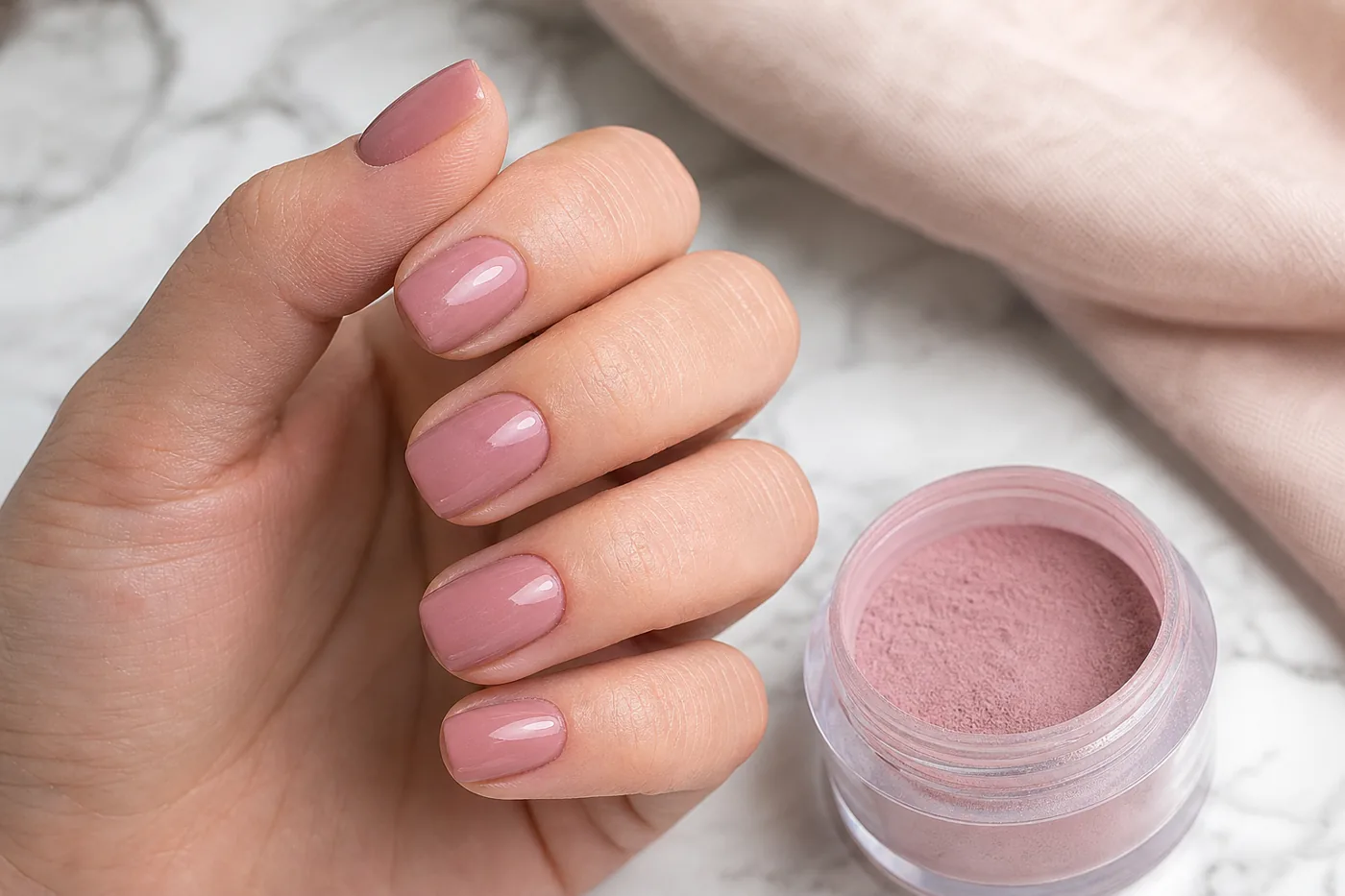
Dip powder nails are known for being tough, glossy and long-lasting – often three weeks or more – without a UV lamp. If you’re curious about how they work and whether they’re better than gel, here’s everything you need to know.
What is a dip powder manicure?
A dip manicure uses coloured acrylic-type powder that bonds to the nail with a special liquid (a resin “base” and an “activator”). The nail is coated with base, dipped into (or sprinkled with) powder, and the layers are hardened with the activator. No lamp is needed.
The result is a thin but strong layer – somewhere between gel polish and acrylic in strength.
How a dip manicure is done
- Prep: shape, push back cuticles, buff the shine, cleanse.
- Bond/primer on the natural nail.
- Base coat, applied quickly to one nail at a time.
- Dip or pour powder over the nail; tap off the excess.
- Repeat base + powder for 2–3 layers.
- Activator to harden.
- File and buff to shape and smooth.
- Second coat of activator, then top coat (two coats for maximum shine).
- Cuticle oil.
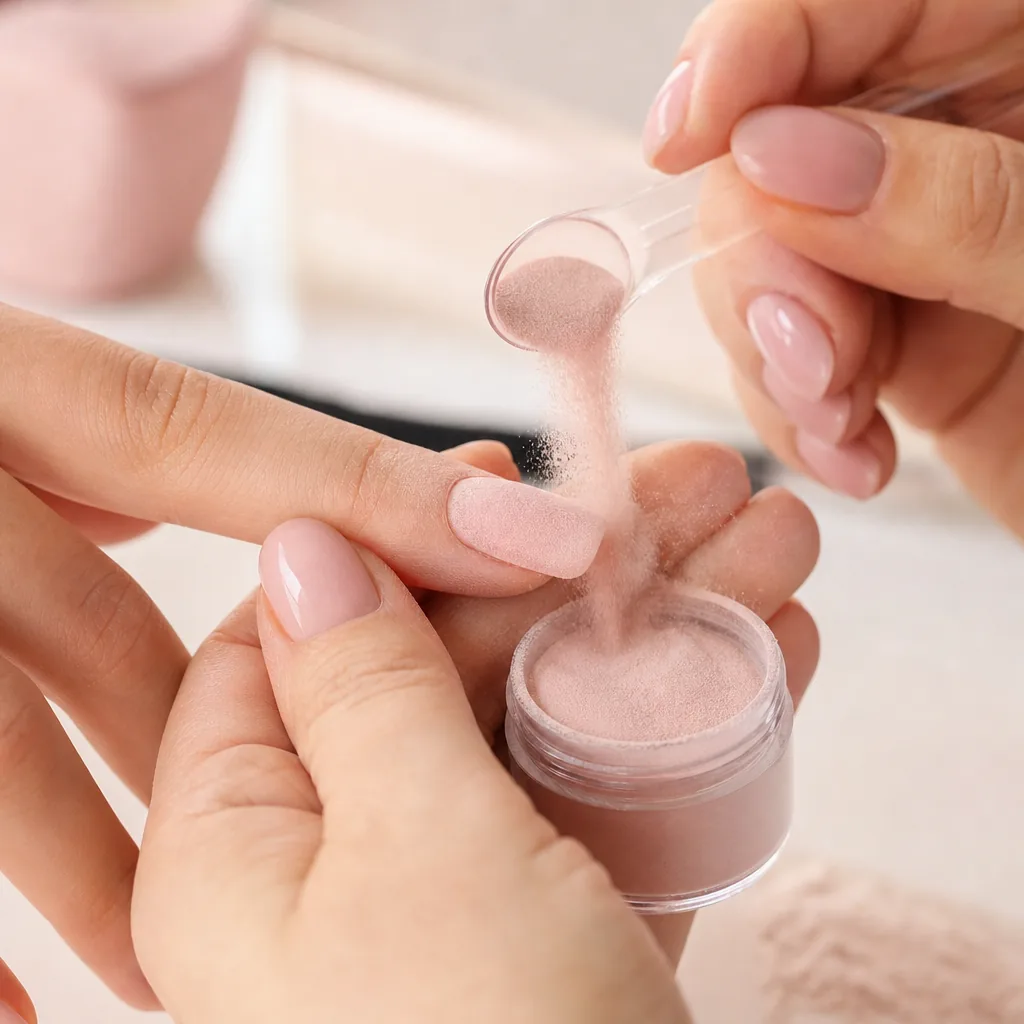
Dayli tip: Ask your salon whether they pour the powder over your nail or dip your finger directly into a shared jar. Pouring (or using a separate portion for each client) is the more hygienic method.
Dip vs gel: which is better?
| Dip powder | Gel polish | |
|---|---|---|
| Lamp needed | No | Yes (UV/LED) |
| Wear time | 3–4 weeks | 2–3 weeks |
| Strength | Stronger | Flexible |
| Thickness | Slightly thicker | Thinner, more natural |
| Finish | Very glossy | Very glossy |
| Colour range | Good | Huge |
| Nail art | Limited (ombré, French with practice) | Easy |
| Removal | Longer acetone soak | Acetone soak |
Choose dip if you want maximum durability, are hard on your hands or prefer to avoid UV lamps. Choose gel if you want a thinner, more natural look, lots of colour options or nail art. See our gel manicure guide.
How long does a dip manicure last?
Typically 3–4 weeks. Because it’s so durable, the main limit is regrowth at the cuticle rather than chipping.
How to remove dip powder safely
- File off the top coat and most of the colour (carefully, without reaching the natural nail).
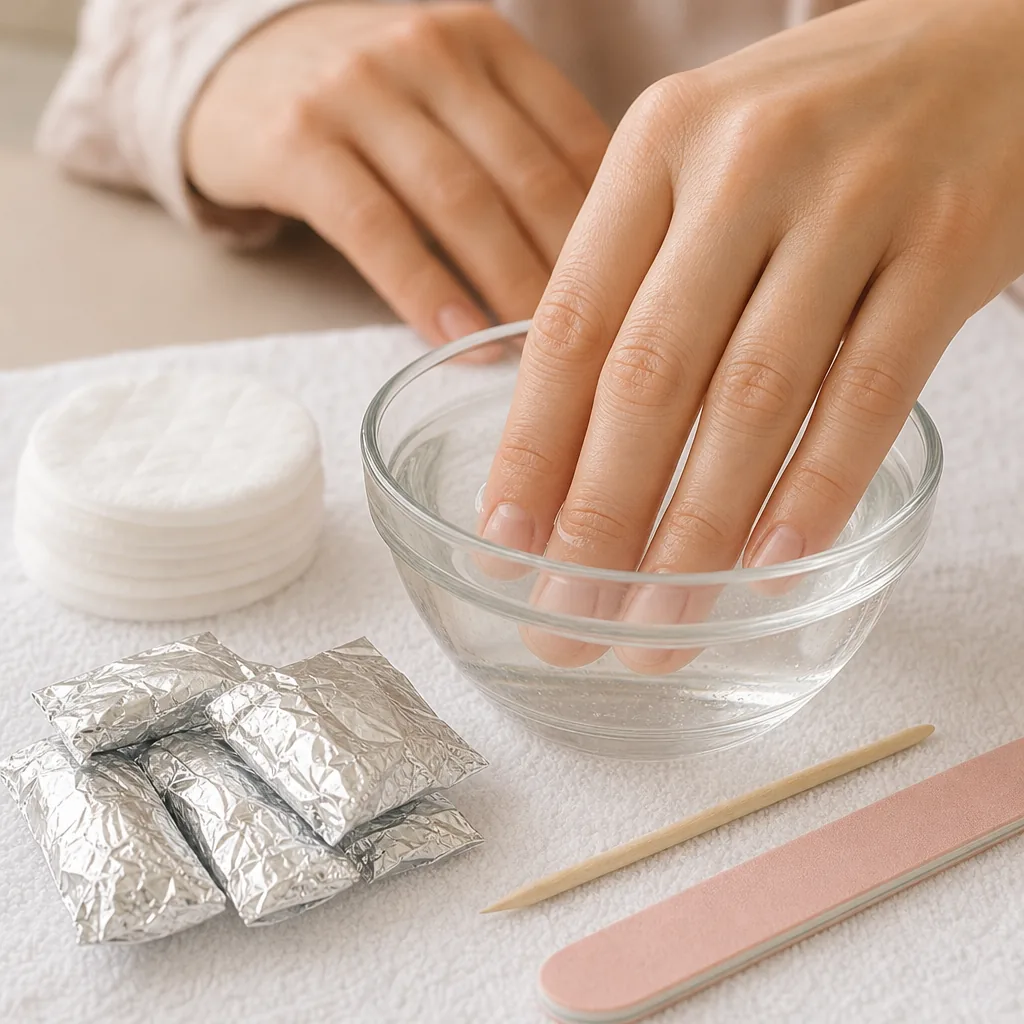
- Soak in pure acetone – in a bowl, or with cotton and foil – for 15–20 minutes.
- Gently scrape the softened powder with a wooden stick; re-soak if needed.
- Buff smooth, wash, and apply cuticle oil.
Never pry dip off: like gel and acrylic, it removes layers of your natural nail.
Pros and cons at a glance
Pros
- Very long-lasting and chip-resistant.
- No UV lamp.
- Adds strength to weak nails.
Cons
- Slightly thicker look.
- Longer removal.
- Hygiene depends on the salon’s method.
- Less suited to detailed nail art.
Frequently asked questions
Is dip powder bad for your nails?
Not inherently. As with any enhancement, the risks come from over-filing and improper removal. Read the healthiest fake nails for tips.
Can you do dip nails at home?
Yes, home dip kits are popular. Work one nail at a time, keep powder off the skin and follow the kit’s order of liquids exactly.
Can dip powder be used for French tips?
Yes – dip the tip in white powder at an angle, or use a pink-and-white kit. It takes a little practice to get a clean line.
The bottom line
Dip powder is the strong, lamp-free option for people who want a manicure that lasts a month. Gel wins on thinness and creativity. Choose a salon that pours the powder rather than double-dipping, remove it with patience, and you’ll get the best of dip without the downsides.