
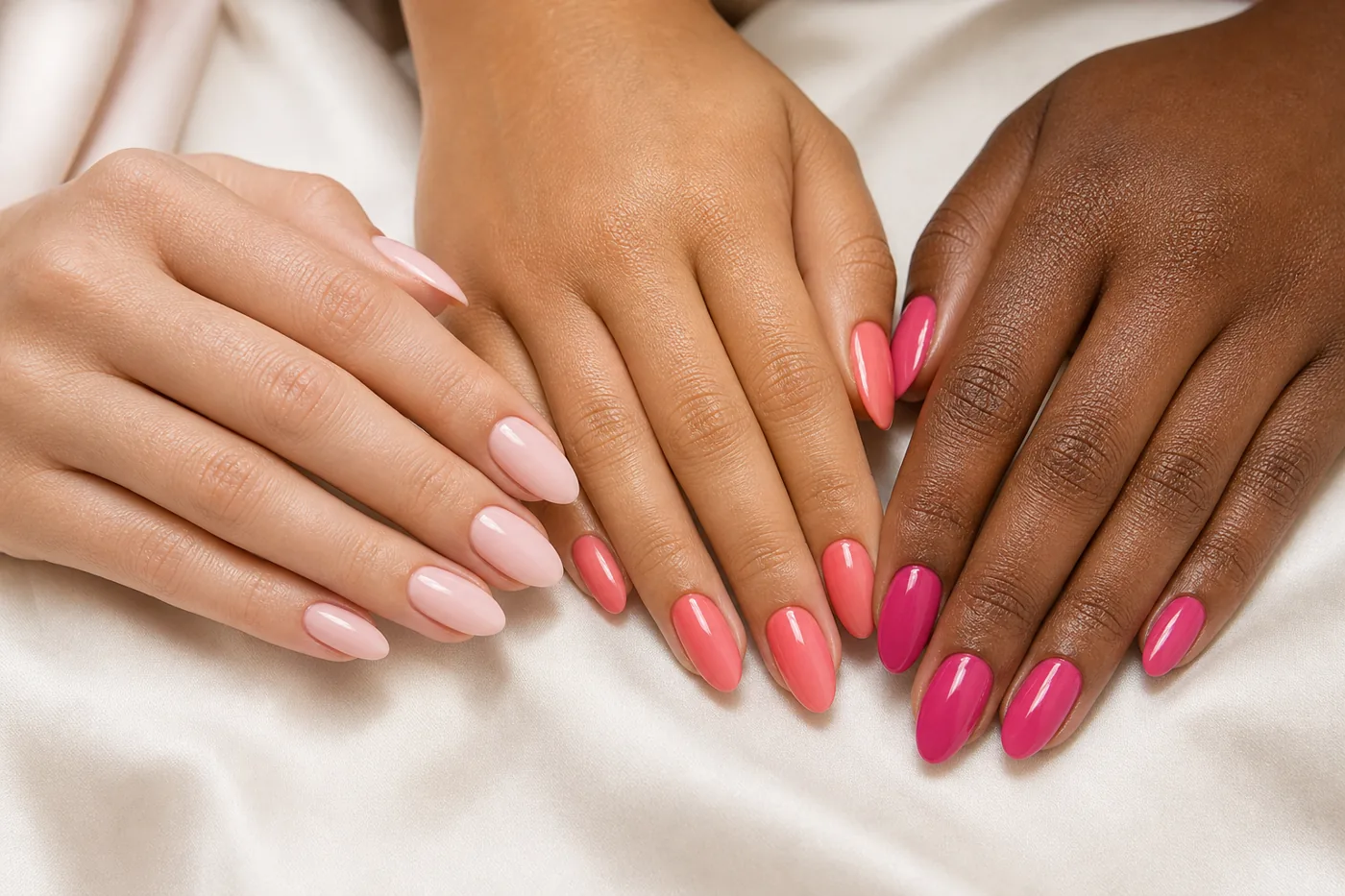
Pink is the most popular nail colour family – but anyone who has tried a “pretty” pink that made their hands look washed out knows that not every pink suits everyone. The good news: there’s a flattering pink for every skin tone. It’s all about undertone and contrast.
Step 1: Find your undertone
Your skin tone is how light or deep your skin is. Your undertone is the colour beneath the surface – and it matters more for choosing polish.
- Cool: veins on your wrist look blue or purple; silver jewellery tends to flatter you.
- Warm: veins look greenish; gold jewellery tends to flatter you.
- Neutral: a mix of both, and both metals look good.
Step 2: Match the pink
| Skin tone | Cool undertone | Warm undertone | Neutral undertone |
|---|---|---|---|
| Fair | Ballet pink, baby pink, cool fuchsia | Peachy pink, soft coral | Sheer rose, mauve |
| Medium / olive | Raspberry, rose pink | Coral pink, salmon | Dusty rose, watermelon |
| Deep | Bright fuchsia, magenta, hot pink | Warm berry, deep coral | Rich rose, bold bubblegum |
Pinks for fair skin
Fair skin looks fresh with soft, slightly sheer pinks that have a blue or neutral base – think ballet slipper or milky pink. If your skin is warm, choose a pink with a hint of peach to avoid looking pale. For drama, a cool fuchsia gives great contrast.
Pinks for medium and olive skin
Medium skin can wear almost any pink. Watch out for very chalky pastel pinks, which can look grey; instead go for dusty rose, coral pink and raspberry. Olive undertones look especially good with rosy, slightly muted pinks.
Pinks for deep skin
Deep skin tones make saturated pinks look incredible – hot pink, fuchsia, magenta and bold bubblegum. For a softer look, choose an opaque, creamy pink rather than a sheer one, which can look ashy.
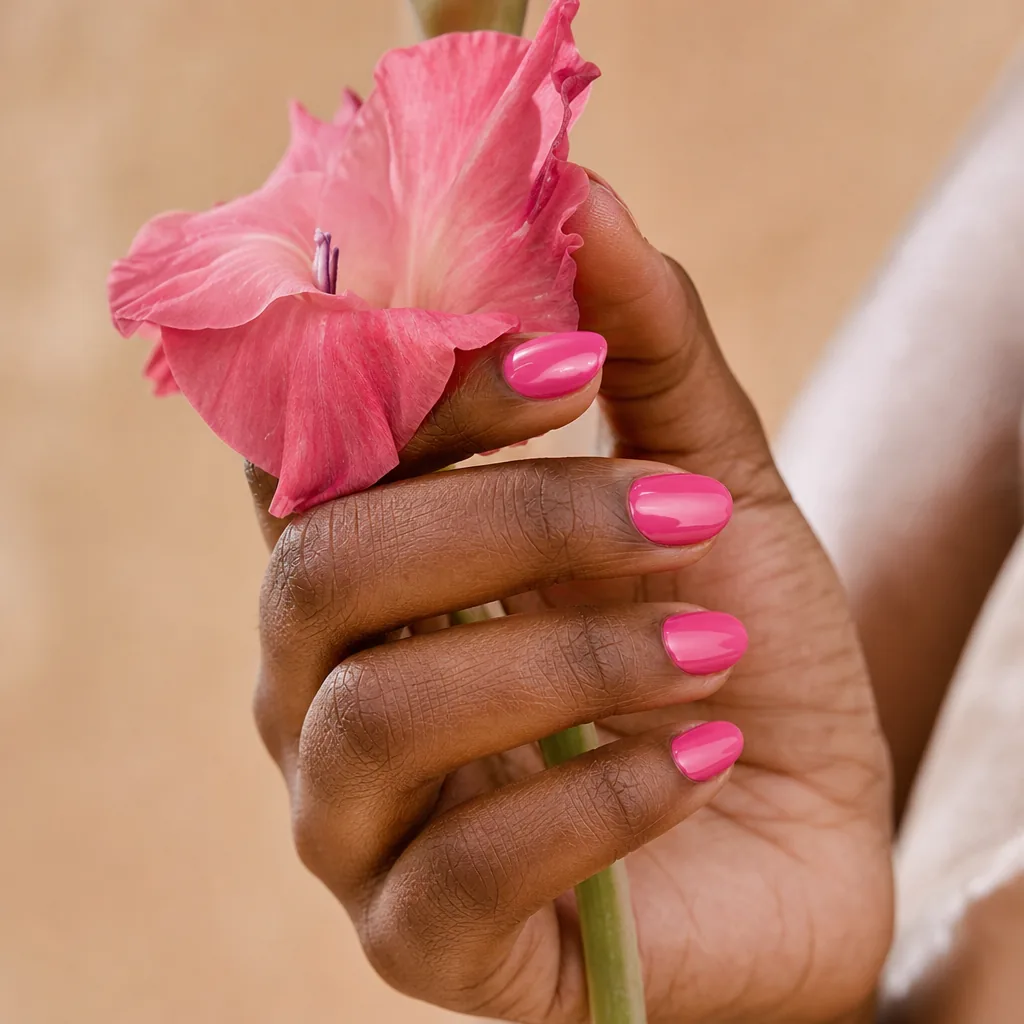
Dayli tip: Always test a pink on your whole nail in daylight, not just on the bottle or under shop lighting. A shade can look completely different next to your skin.
Finishes that change everything
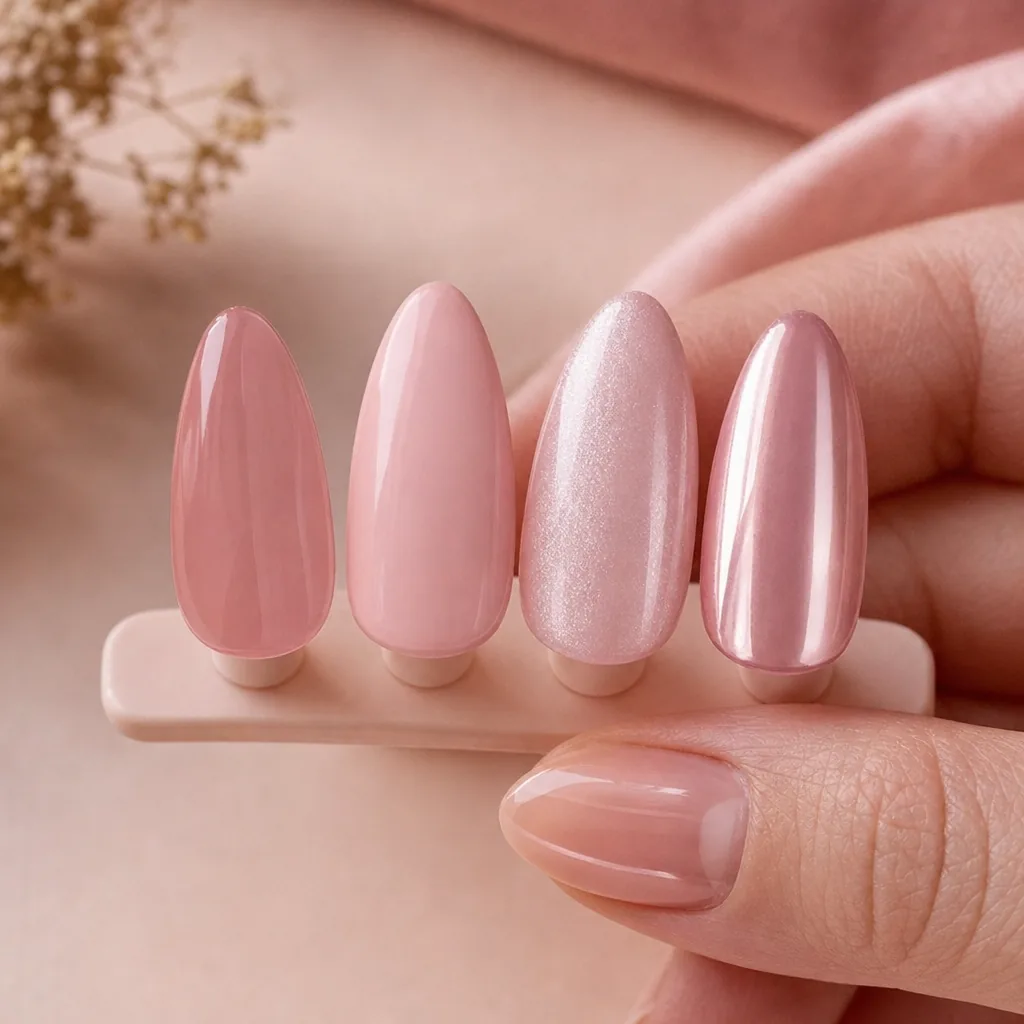
- Sheer/jelly pinks: natural, “your nails but better” look.
- Creamy opaque pinks: classic and bold.
- Shimmer and pearl: brighten cool skin tones.
- Chrome glazed pink: trendy and flattering on most skin tones.
How to test a pink shade before you buy
- Swatch it on a nail tip or your thumbnail rather than looking at the bottle.
- Check it in daylight near a window – shop lighting is often warm and flattering.
- Look at your whole hand: the right pink makes your skin look brighter and your hands more even; the wrong one emphasises redness or makes skin look dull.
- Compare two pinks side by side – one cooler, one warmer. The difference is usually obvious.
Pink for different occasions
| Occasion | Best pinks |
|---|---|
| Work | Sheer ballet pink, dusty rose, mauve |
| Wedding / bridal | Milky pink, sheer pink with pearl chrome |
| Holiday | Coral pink, bubblegum, hot pink |
| Evening | Magenta, raspberry, pink chrome |
If you have redness around your nails
If your cuticles or fingers tend to look red, avoid pinks with a strong red or orange base, which can emphasise it. Choose a cool, slightly muted pink or a pink with a milky white base – it neutralises redness and makes hands look calmer. Daily cuticle oil and hand cream help too.
Frequently asked questions
What’s the most universally flattering pink?
A dusty rose or a soft pink with a neutral base. It sits between cool and warm, so it suits most people.
Which pink makes hands look tanned?
Warm, bright pinks like coral pink or watermelon create contrast that makes skin look sun-kissed.
Are nude pinks the same for everyone?
No – a “nude” should be close to your own skin tone, so a nude pink for fair skin is very different from one for deep skin.
Want more pink inspiration? See our full pink nail polish guide.
The bottom line
Find your undertone, choose a pink that complements it, and pick an opaque formula if a sheer one looks ashy. Once you find “your” pink, it’ll become the shade you reach for again and again.