

Fake nails get blamed for a lot of damage – thin, peeling, sensitive nails after a few months of enhancements. But in most cases the problem isn’t the product itself. It’s how it’s applied, how long it’s worn and, above all, how it’s removed.
Here’s an honest look at the main types of fake nails, which ones tend to be gentlest, and the habits that make the biggest difference.
The quick answer
If you want the gentlest option, go for:
- Press-on nails applied with adhesive tabs – nothing touches your nail except a sticker, and removal is easy.
- Soft gel or press-ons with gel adhesive, removed properly – very natural, and gentle as long as you soak them off.
- Builder gel (or “BIAB”) on your natural nail – it adds strength rather than length and is great for people who want to grow their own nails.
Acrylic and dip powder can also be worn safely, but they require more filing and a longer soak-off, so technique matters even more.
Comparison at a glance
| Type | Filing of natural nail | Removal | Best for |
|---|---|---|---|
| Press-ons with tabs | None | Peel after warm soak | Short-term wear, events |
| Press-ons with glue | Light buffing | Soak in warm soapy water + oil | 1–2 weeks |
| Soft gel tips | Light buffing | Acetone soak | Natural-looking extensions |
| Builder gel / BIAB | Light buffing | Acetone soak or infill | Strengthening, growing nails |
| Dip powder | Light buffing | Longer acetone soak | Durable colour |
| Acrylic | Buffing + more filing | Acetone soak or infill | Length and strength |
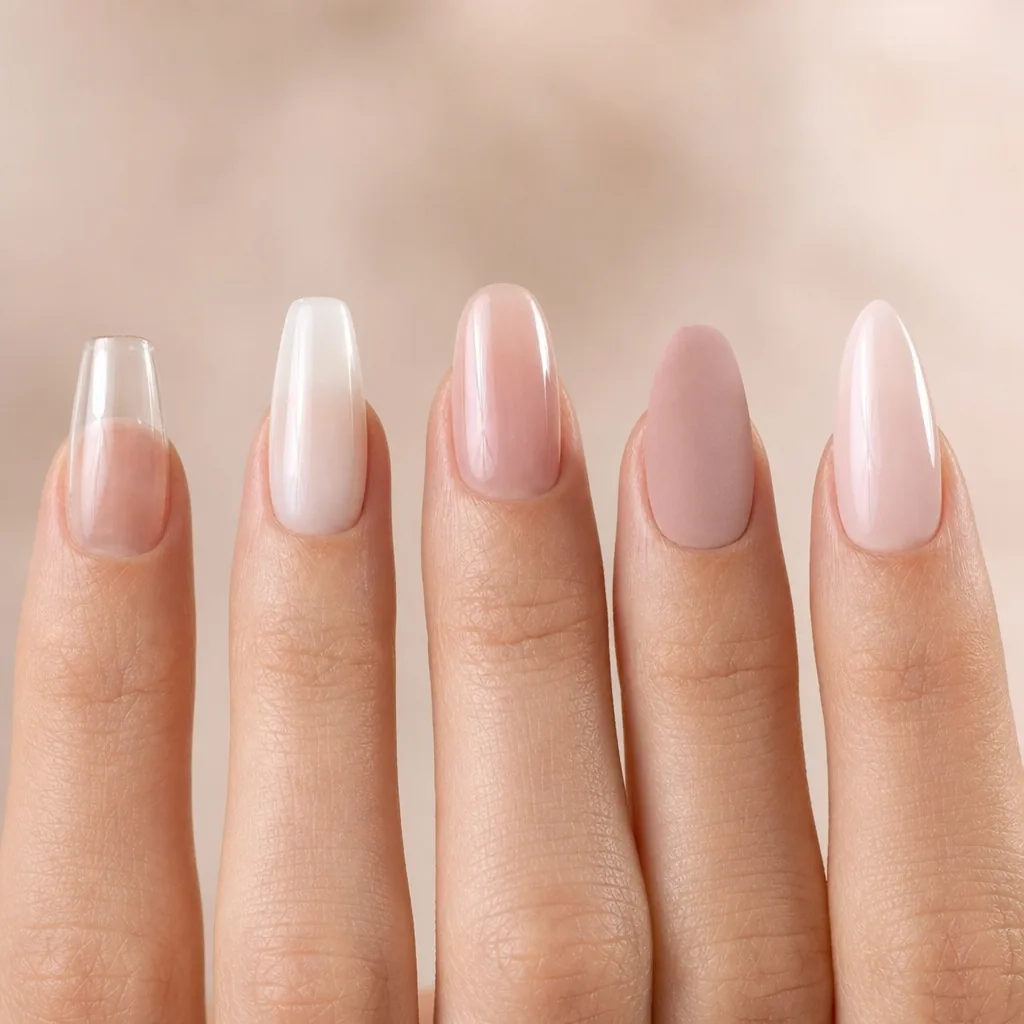
What actually damages your nails
1. Over-filing
Every enhancement needs a lightly roughened surface to stick, but heavy filing – especially with an electric file used too aggressively – thins the nail plate. A good technician only removes the shine.
2. Peeling or ripping off the product
This is the biggest culprit. When gel or acrylic is pulled off, it takes layers of the natural nail with it. Always soak off or have the product filed down by a professional.
3. Wearing enhancements too long
As your nail grows, the product moves forward and the weight shifts. Lifting appears, water gets under the edge and the nail can break or develop problems. Refill or remove every 2–4 weeks.
4. No moisture
Acetone and gel dry out both skin and nails. Without oil, nails become brittle.
5. Product touching the skin
Gel or monomer that repeatedly touches the skin can lead to allergic reactions over time. If you do your own gel nails, keep product off the cuticles and side walls.
Dayli tip: Cuticle oil is the cheapest nail-care product with the biggest effect. Apply it once or twice a day – especially after washing your hands – and massage it into the cuticle and under the free edge.
How to wear fake nails safely
- Prep gently: push back cuticles, buff only the shine, cleanse with alcohol.
- Use the right adhesive: quality nail glue or gel adhesive – never household superglue.
- Respect the timing: refill or remove at 2–4 weeks.
- Remove patiently: soak, don’t pry.
- Take breaks if needed: if your nails feel thin or sensitive, give them a few weeks with a strengthening base or builder gel overlay only.
- Watch for warning signs: green or dark patches under the nail, swelling, pain or nails separating from the bed mean you should remove the product and see a doctor.

Frequently asked questions
Are press-on nails healthier than acrylics?
Generally yes, because they need little or no filing and come off easily. That said, glue-on press-ons pulled off dry can damage your nails as much as any other product. See our gel vs acrylic press-on comparison to choose the right type.
Is builder gel better for natural nails?
For many people, yes. It reinforces the nail so it can grow without breaking, and it can be infilled rather than removed every time, which means less exposure to acetone.
Can my nails “breathe” under fake nails?
Nails don’t breathe – they get oxygen and nutrients from the blood supply, not the air. Breaks are still a good idea if your nails are thin, but for repair, not for air.
How long does it take damaged nails to recover?
Fingernails grow roughly 3 mm a month, so it takes around 4–6 months to completely replace a damaged nail. Keep them short, oiled and protected in the meantime.
The bottom line
The “healthiest” fake nail is the one applied with light prep, worn for a reasonable time and removed gently. Press-ons with tabs, soft gel and builder gel are the easiest to keep kind to your nails – but even acrylics can be worn safely in skilled hands.
Want a technique that keeps your cuticles perfectly clean? Read our guide to the Russian manicure.